Saturday, September 15, 2012

Adorno "On Popular Music"

This post is a bit late, but I wanted to share the videos I presented during my Media Share on Tuesday!

Just a brief recap, Adorno contrasts popular music with "serious music", and he concludes that pop music is characterized by standardization while in serious music, "every detail derives its musical sense from the concrete totality of the piece which, in turn, consists of the life relationship of the details and never a mere enforcement of a musical scheme."

Pop music examples 

Kpop (similar format, repetition of title)
Gee - Girls' Generation

Sorry Sorry - Super Junior


Taylor Swift - #2 on Billboard 100 list
This song is a good example of how "popularity lists" can play a role in boosting the actual popularity of a song.
Taylor Swift - We Are Never Ever Getting Back Together

Same Chord Songs
Also, if you remember in class, we watched the "4 Four Chord Song" by Axis of Awesome.
I was telling Alenda that there are a couple of Chinese popular music combos that use the same concept. Here is just one example:
http://v.youku.com/v_show/id_XMjE3MTg3MDA=.html
This is a 13-minute long song that combines about 30 popular Chinese songs. I don't think they use the same four chords throughout, but the concept is very similar.

Hope this helps explain Adorno's concept on pop music!


Thursday, September 13, 2012

Fast-food combo of love, luxury and purpose

Niedzviecki's "EVERYONE'S A STAR" strikes me as utterly true to the core. A major idea that he points out is that popular culture today encourages us to reach for the skies and run after our dream of becoming famous despite the  fact we may be as ordinary as it gets. There is a huge hype going on: everyone wants to become a superstar. This reminds me of how Professor Retzinger gave the example of how kids shifted from playing Candyland to playing Kids on Stage. But is it our fault that we strive for this dream? In reality, media has really embedded this fantasy in our minds to genuinely believe that this is what we want rather than living a mediocre life. Popular culture fills our head with empty promises of success, which Niedzviecki describes as the "fast-food combo order of everlasting love, luxury, and life purpose" (69).

He begins the passage using Canadian Idol as an example to show how the opportunity of being discovered has opened up. The thought of possibly making it becomes a potential reality. Regardless of who wins the ultimate show, all of the contestants have the same thing on their mind: I'll be recognize for simply being on the show. A contestant that Niedzviecki interviews even says "you get seen and maybe picked out for something else in movies, or singing or dancing." It's not a matter of which show you win; rather, how much time you get on the air. Todd Gitlin writes, "Today, there are vast possibilities for micro-celebrity: the talk-show guest, the studio spectator... the neighbor on camera after the kidnapping next door, the character wading into the margins of 'real life,' saying 'Look at me, I'm here too!'" He refers to the people who so desperately yearn to be on camera, noticed, for their 15 minutes of fame.

This bring me to the video I would like to share with you all. Do you remember the home break-in on the news and the protective brother of the victim? His emphatic speech meant for the intruder became a hit on YouTube, where people made remixes of it. If you were thinking Antoine Dodsen, you're right. He had two minutes on the air and those two minutes granted him all of this fame. He now has a YouTube channel with more than 106,000 subscribers. Even though he didn't mean to get famous in the first place, he is now using his reputation and the publicity to make himself known even more, doing celebrity meet-and-greets, filming commercials, and interviews. You can even find Halloween costume of the outfit he wore in the video.

Here is the original news coverage

Enjoy the remix


A preview of one of the commercials he did

Wednesday, September 12, 2012

Conform to the "Norm" of Pop Culture

I will be the first to admit that I am a pop culture junkie; I actually enjoy knowing what the chart toppers are and which celebrity is dating which. Hal Niedzviecki discusses the ubiquity and omnipotence of pop culture in his essay "Everyone's a Star: Pop Culture Invents the New Conformity." He argues that pop culture penetrates our identity a lot more than we can imagine; we acknowledge the fact that pop culture is virtually everywhere within society, but it affects us in so many different ways. It creates the illusion of perfection, or at least obtainable perfection, within our lifetimes. It forces our hands to mold images of ourselves as relevant to society through the choices we make. We are tricked into believing that we control our individual identities; instead, we are merely taught the illusion of choice. As the author says, we probably will not "meet another human being on the planet who has escaped pop culture's hold on the imagination." (80)

Niedzviecki's idea of "separate autonomous culture" made me think of a distant but omnipotent monarch.


One point that Niedzviecki makes that really struck a chord with me is that pop culture acts as a distant yet very powerful entity in our lives ("separate autonomous culture," 90). It entices us with bright lights and sounds, only to lead us further away from ourselves, our identities. Movie premieres is one of those bright lights that converts me into a media zombie; the glamorous dresses and more-than-perfect bodies aspire me to become like them, the people in the spotlight. However, I am not them... for one, I love to eat! Regardless, there are many times when I find myself tempted to purchase a ridiculously expensive brand name dress, or restrict my diet to water and vitamins. It turns out that becoming like these celebrities is all but impossible for me, for I have yet to look as cool and suave as Angelina Jolie. I get so sucked into the spectacle of pop culture that it becomes impossible to get out - I've paved the path to my own disappointment.

Of course, Niedzviecki's essay is not only relevant to myself. I know that everyone reading this post can relate to the reading in one way or another. It kind of makes me relieved to know that "I'm not the only one." (83)

One Direction and Super Junior Commodified & Packaged

This blog will be examining the 'Consuming Popular Music' article. This article explores Pop music as a commodity, exploitation of consumers, the music industry and whether popular music is a control or a protest.

What I found interesting about this article was the in the section, 'Popular music as protest or control?'
Miles describes how the Beatles went through a "lucrative revival," reproducing their previous record collections in newly re-reproduced recordings. He gives the example of the "Free as a Bird" recordings. Due to the success of this record, the Beatles earned 10 million pounds. A television documentary and books were released, which started the Beatles industry. I was particularly surprised that their videos, books, CDs and TV shows earned them more than $100 million. Reading this part of the article reminds me of the British boy band, One Direction. As of 2012, they have earned 40 million for their 12 million record sells. It is most likely that they are earning millions more in their concerts, documentaries, books, and other One Direction related stationary and goods. By manufacturing these commodities, the music industry is exploiting consumers to maximize their profits. However, I do understand that the music industry is only commodifying these music groups because they are popular among the fans and audiences who are the consumers that absolutely no problem buying One Direction commodities.


http://www.entertainmentwise.com/news/87777/One-Directions-2012-Earnings-Reach-40-Million


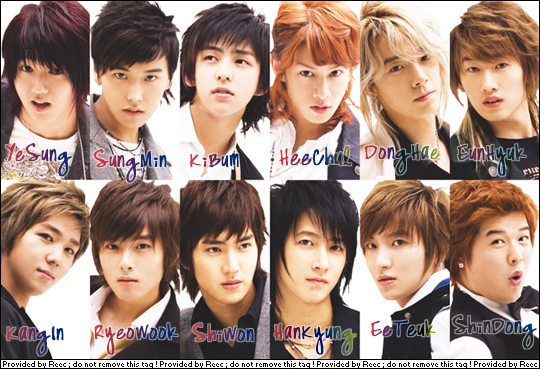
In addition, Miles argues that the music industry is manufactured and a programmed consumption. They present an "overall package," a final product for the fans who are obsessed with not only a band's music but also the members' looks, sexuality, personality. An example of this kind of excessive overall packaging of a music group is the Korean pop group, Super Junior. Although Super Junior is a Korean group that is active in Asia, the same "overall package" notions can also be applied to this group because the Korean music industry works in similar ways of the U.S music industry. Super Junior, a 12 member boy k-pop group, has little musical talent.
However, they have gained extreme popularity with their dancing, catchy lyrics, music videos, appearances in a variety of entertainment shows, concert tours in Asia, and their various masculine yet cute appearances and personalities. Despite their lack of musical talent, Miles's suggestion that musical forms have been diversified since Adorno's time in the 30s can be applied to their music as well. Super Junior songs were once considered original songs and formats but all the other k-pop groups began to follow the same style as Super Junior and the songs by k-pop groups became manufactured, superficial, and repetitive.

As a result, popular singers and groups have become commodified in the music industry to maximize profits. But without the popular demand by fans, popular groups as commodities would not be a lucrative business. Also, the industry manufactures boy bands or pop groups and sells them as an overall package to the consumers so that fans will become obsessed with every aspect of their "products," the musical groups.


Who put the "POP" in popular culture?: musings on Leo Lowenthal's "Historical Perspectives of Popular Culture"


Lowenthal’s study “Historical Perspectives on Popular Culture” brought to mind several aspects of Adorno’s “On Popular Music” that I felt worth discussing, primarily with regards to Lowenthal’s interest on the human need to create this ‘popular’ culture, and how the creation of this culture problematizes the interrelationships that exist between the individual, society (in all its forms, that is political, economical, social, etc...) and the existence of ‘popular’ culture itself. Many of the arguments that Lowenthal posits brought about another perspective to the many questions that surfaced during my reading of Adorno’s seminal text.
            The first section of Lowenthal’s article consists of a collection of historical references to popular culture as made by such philosophers as Nietzsche, Karl Kraus, Pascal and Montaigne, especially with regards to the differing views on leisure that these different thinkers held, and how these perspectives related to Adorno’s mention of pleasure and leisure that surface in many of his writings. In “The Culture Industry”, Adorno asserts that “pleasure always means not to think about anything, to forget suffering even where it is shown.” With this statement, Adorno seems to be arguing that with pleasure and leisure comes the danger of ignorance as to the present state of the world around the individual. In the opening paragraphs of “Historical Perspectives,” Lowenthal seems to be making the claim that the ‘birth’ of popular culture, so to speak, was the result of a collective desire on the part of most individuals to feel part of something bigger, outside the monotony, stress, and boredom of their daily existences. I found it interesting that even such thinkers as Montaigne and Pascal were aware of the implications of ‘popular’ culture, even at a time before effective mass media technologies such as radio and internet had been established.
            In regards to this idea of the birth of ‘popular’ culture as stemming from the individual’s desire to feel included in a larger, collective society, a series of questions regarding the inextricable relationship that appears to exist behind the idea of who creates who, and what drives what in the world of popular culture immediately came to mind. That is, are individuals the product of what they see and “digest” through ‘popular’ culture, or do individuals actually have more control over what puts the ‘popular’ in popular culture. This question, I suppose, takes on a bit of that age-old “What comes first, the chicken or the egg?” quality, which in turn, caused me to question Adorno’s notion of pseudo-individualization and at what point this pseudo-individualization begins to take form. Does the individual ever have the opportunity to drive ‘popular’ culture, or are they always at the mercy of the culture industry? One of the facts that both Adorno and Lowenthal seem to have overlooked is that this ‘popular’ culture machine is made up of a series of human cogs that keep it functioning. What role--or perhaps, more importantly, what responsibilities--do the individuals that work in this industry have in the creation and dissemination of a unifying ‘popular’ culture? One of the truly interesting points made by Lowenthal in the article had to do with his mention of the Austrian critic Karl Kraus’s theory on language and its role in this interrelationship between the individual and society. In one of his works, Kraus states that “the hollowing-out of language that we can see is the disintegration, and even the disappearance, of the concept and existence of the autonomous individual, of the personality in its classic sense” (Lowenthal, Page 11). Despite the fact that for Kraus, the emergence of language automatically precludes the formation of an autonomous self, it brings up the interesting dilemma that appears to exist side-by-side with the power of ‘popular’ culture. Humans appear to be a grand paradox in and of themselves in this sense. We favor individuality (especially in the West), yet the very fact that we seek relationships and inclusion into a greater community (made possible through the development of language) seems to force us to give up, to an extent, our full individual autonomy. Adorno’s idea of pseudo-individualization comes into power here in that it appears to respond to the classic dissonance that pervades the human psyche--that desire to remain part of a collective group, to fit into that collective group (something made possible by the fabrication of a ‘popular’ culture which creates that space by which individuals can find inclusion into these groups) while still holding on to that desire to maintain a certain sense of an individuality unfettered by the machinations of a mass, ‘popular’ culture.        

Tuesday, September 11, 2012


(Source:  http://themetapicture.com/burned-on-live-television/). Posted September 8th, 2012.
I am unsure what show this is, but I thought it was hilarious and kind of relates to Adorno's critique of popular music, how the music is being produced easily and cheaply, and now we have the help of machines to quicken that process, like auto tune. The talent of voice, rhythm, and tune are assisted with machines that produce pop music, and it seems that all we need now is a celebrity persona and money.
* To Alenda: Please don't count this as one of my blog post points, I just think it is a humorous approach to the topic at hand!

9-11 Disc. Apple/Leisure


I thought the apple commercial was really interesting in a couple ways. I was most interested in the very athletic woman running in, tan and colorful amongst a sea- a world of humdrum grey "pieces of the the machine." The use not just of a woman, but a woman filling what is classically a man's role in the media. She comes running in with the Thor like hammer, being chased by lesser men that are hopeless to stop some one so fast and strong was. The hammer being thrown at the huge, hypnotizing screen smashing the hegemonic norm on all levels. Apple is not only saving "us," the consumer from standardized technological consumerism, but if we turn to their company we will be saved from the standard on all levels. Women will fill men's roles, your computer will be unique and special, grey will become color and you will be thwarting the ruling authority of your time. I really liked the strong message being pushed through on all levels. It seems to continue today with Apple preparing their presentation building for the release of the iPhone 5 tomorrow, 9-12. I may stretching it here, but initially the color scheme, not new for Apple, seemed close to the gay pride rainbow. Continuing the stretch it seems as if Apple continues to find lesser served segments of the population and appropriating their iconic imagery as symbol of bucking the mold. This is a much more subtle example, but it would have to be now, right? I mean you cant keep saying your gonna be the new individual on the block with new things now that everyone has what you have.. But you can subliminally suggest it. Thats why I like this picture. As I look at it more, its just a building with bright colors that have been used before by Apple to promote individuality and the first reaction I had is fading, but i already had the reaction. The reaction being that this company relates to the independence, the strength, the eclectic and cultured nature of a place like the Castro, a section in the same city as the presentation building.


Switching topics to thoughts on leisure as an industry. If all the people in the leisure industry are at work serving and explaining and entertaining what is the product? Is it the authentic tasting Mojito served to the consumer? Is it the experience of sliding down a natural waterfall? The smell of la boulangerie in the streets of Paris? The finished product is the vacationer. This is what is being sold to the consumer. The idea that while on vacation we are not only there just to recharge our batteries so that we may return to work or so we think we lead interesting enough lives, but in our time off work we often opt for the ultimate in becoming a cog in the machine in that we willingly become the product. We are the consumer on the assembly line, not as an employee working the line, but as a simple product. not there to think, there to experience what the assembly line offers: As you stand on the conveyor belt it moves you through the toaster/white sand beach for your tan, as you roll out of the glow a worker slaps a Hawaiian shirt and sunglasses on you as another worker straps you in to a zip-line harness, you ride briefly down the line, you stop a picture is taken, immediately printed and stuffed in to an envelope with your mailing address. Everyone smiles as you are carted off to a club or a statue of something epic. New types of food are shoved in your face - ALCOHOL - because there is no good vacation without mind alteration. At the end of the line there are a group of people you don't really know, everyone gathers for a group photo and is packaged back up delivered to the shipping center/airport and sent back to their respective lives. At home the picture file awaits on Facebook along with a slew of new "friends" that you can stay connected with from the contentment of your own living/bedroom. It is here when the product is finished. Now your friends can see the amazing, unique adventure you returned from and the new, unique people you met on the "road of life" and now the product is complete and you can take your ass back to work.